الأغاني
غني لي شوي شوي
Ghanni Li Shwayya (Sing to Me, Softly)
- السنة
- 1945
- كلمات
- بيرم التونسي
- ألحان
- زكريا أحمد
- المقام
- Rast
السطور الموسومة بعلامة ذهبية تحمل شرحًا — اختر أيّها لقراءته.
غنّي لي شوي شوي
Ghanni li shwayya shwayya
Sing to me, softly, softly
The refrain is built from a doubled diminutive — shwayya shwayya, "little by little" — and Zakariyya Ahmad sets it in maqam Rast, the poised, luminous mother-mode of the Arabic system. Rast's balance suits a song whose subject is song itself: nothing to prove, everything to savor.
"Softly, softly" is also a performance instruction, and she obeyed it selectively: each return of the refrain came a shade differently ornamented, a turn here, a suspension there. The audience learns the words instantly and then spends the rest of the piece hearing them refuse to repeat.
غنّي لي وخد عنيّا
Ghanni li w khod 'eneyya
Sing to me — and take my eyes
"Take my eyes" is colloquial Egyptian at its most extravagant — the eyes being the proverbial seat of what is most precious. Bayram al-Tunisi, master of the vernacular zajal tradition, lets ordinary speech carry an oath of total surrender: payment for a song, tendered in advance.
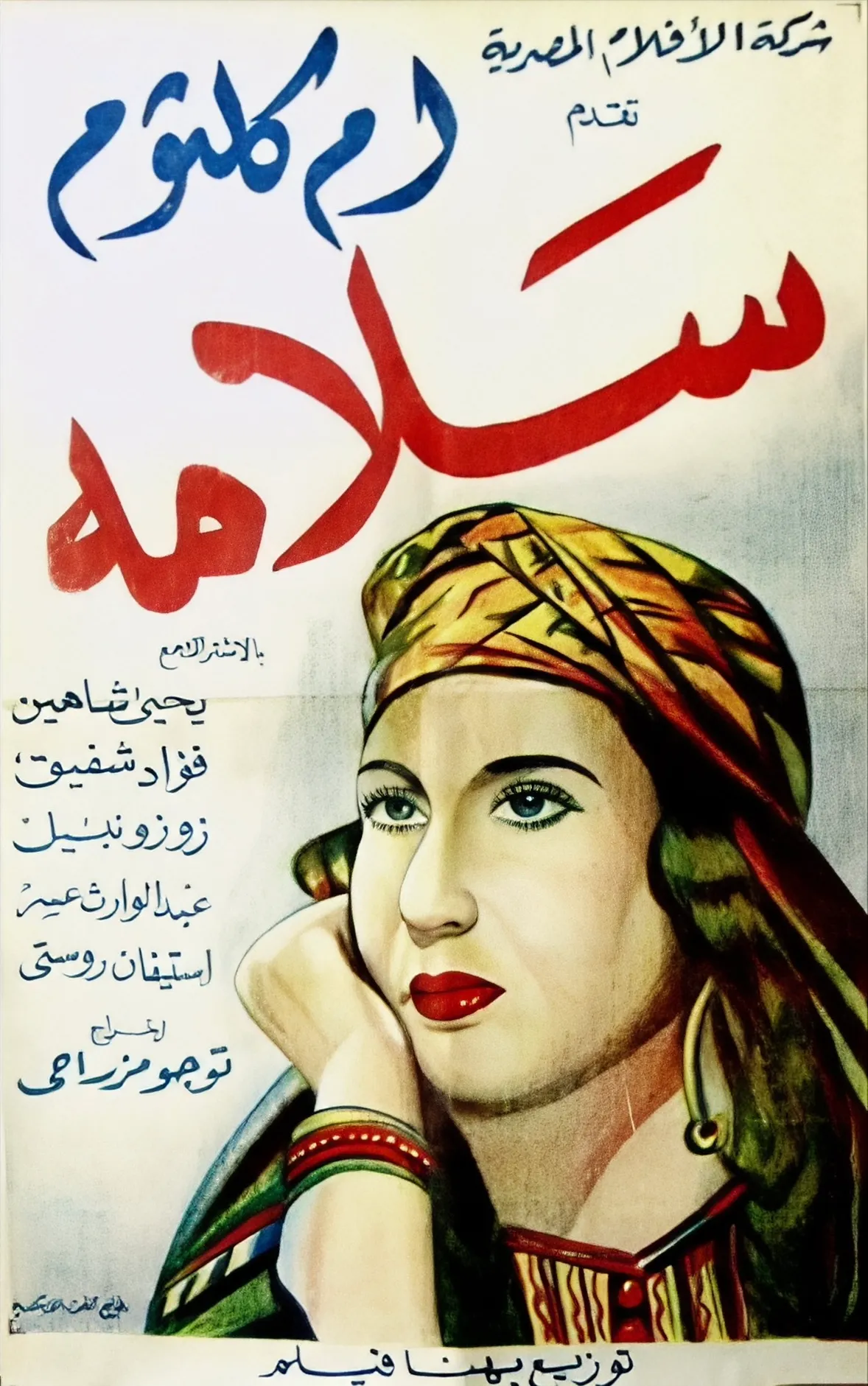
The song comes from the 1945 film "Sallama," in which Umm Kulthum played a gifted singer of the early Islamic era — one of the screen roles that carried her voice into every cinema of the Arab world during the radio decades, when film and broadcast multiplied an audience no concert hall could contain.
خلّيني أقول ألحان
Khallini a'oul alhan
Let me make up melodies
The bargain answers itself: asked to be sung to, she offers to reply in melodies of her own. Song for song is the only currency in this lyric's economy — "let me make up tunes" turns the listener into a singer in the same breath, and the exchange never needs to end.
تتمايل لها السامعين
Tetmayel laha el-sam'een
That set the listeners swaying
Bayram seats an entire garden in the audience: listeners sway, branches flutter. The verb tetmayel — to sway — is the body language of tarab itself, and by granting it to boughs as readily as to people, the lyric claims that responsiveness to song is simply how the world behaves.
وترفرف لها الأغصان
W terafraf laha el-aghsan
And the branches fluttering
النرجس مع الياسمين
El-narges ma'a el-yasmeen
The narcissus with the jasmine
وتسافر بها الركبان
W tesafer biha el-rukban
And the caravans carry them off
From the garden the melodies board the caravans: the riders carry them off, "folding the deserts" beneath them — Bayram slips a high classical idiom (tayy al-bawadi, devouring distance fold by fold) into street Egyptian without a seam. It is also quietly true to the film: in "Sallama" song travels the caravan routes of the Hijaz, and a melody really is the one cargo that reaches every destination.
طاويين البوادي طيّ
Tawyeen el-bawadi tayy
Folding the deserts beneath them as they go
شوي شوي شوي شوي
Shway shway, shway shway
Softly, softly — softly, softly
غنّي لي وخد عنيّا
Ghanni li w khod 'eneyya
Sing to me — and take my eyes
المغنى حياة الروح
El-maghna hayat el-rouh
Song is the life of the soul
The lyric's thesis, phrased like a proverb — and it became one: song is the life of the soul, and the ailing are healed by listening. The idea reaches back through centuries of Arabic writing on sama', listening as cure, and in "Sallama" it is nearly literal plot, since the heroine's voice is both her fate and her fortune.
يسمعها العليل تشفيه
Yesma'ha el-'alil teshfih
The ailing hear it, and are healed
وتداوي كبد مجروح
W tedawi kebd magrouh
It medicines the wounded heart
The wounded organ is the kabid — the liver, classical Arabic's seat of ardent feeling, as the heart is English's — and the doctors are left baffled by the case. Where medicine gives up, the verse prescribes melody; Bayram states the old sama' doctrine as cheerful clinical fact, and the dark-into-lamplight image that follows completes the cure.
تحتار الأطبّة فيه
Tehtar el-atebba fih
That left the doctors at a loss
وتخلّي ظلام الليل
W tekhalli dalam el-leil
And it turns the dark of night
في عيون الحبايب ضيّ
Fi 'youn el-habayeb dayy
To lamplight in the eyes of those we love
شوي شوي شوي شوي
Shway shway, shway shway
Softly, softly — softly, softly
غنّي لي وخد عنيّا
Ghanni li w khod 'eneyya
Sing to me — and take my eyes
لأغنّي وأقول للطير
La-ghanni w a'oul lel-teir
I will sing, and tell the birds
A dawn chorus in reverse: the singer is up before the birds, wishing them good morning, and the turtledove (qumri, a songbird prized in Egyptian homes) and the little green bird of folk speech answer back in time. The couplet is a miniature of the whole lyric — call and response, with the whole of nature holding up its end of the duet.
من بدري صباح الخير
Men badri sabah el-kheir
good morning before the morning comes
والقمري مع الخضّير
Wel-qumri ma'a el-khoddeir
And the turtledove and the little green bird
ويّايَ يردّوا عليّ
Wayyaya yeroddou 'alayy
will answer me in chorus
شوي شوي شوي شوي
Shway shway, shway shway
Softly, softly — softly, softly
غنّي لي وخد عنيّا
Ghanni li w khod 'eneyya
Sing to me — and take my eyes
أحلف لك بربّ البيت
Ahlef-lak be-rabb el-beit
I swear to you by the Lord of the House —
An oath by "the Lord of the House" — the House being the Kaaba — sworn to a listener who trusts the same Lord: vernacular piety sealing a singer's boast. In the film's early-Islamic Hijaz setting the geography is nearly literal, and the swagger that follows — "I will bewitch you all, and set the girls of the quarter dancing" — is Bayram's affectionate portrait of the professional singer's confidence, which the casting made simply true.
يا مصدّق بربّ البيت
Ya mesadda' be-rabb el-beit
you who trust the Lord of the House —
لأسحركم إذا غنّيت
La-s'harkom iza ghanneit
I will bewitch you all when I sing
وأرقّص بنات الحيّ
W ara''as banat el-hayy
And set the girls of the quarter dancing
شوي شوي شوي شوي
Shway shway, shway shway
Softly, softly — softly, softly
غنّي لي وخد عنيّا
Ghanni li w khod 'eneyya
Sing to me — and take my eyes
لأغنّي وأغنّي وأغنّي
La-ghanni w aghanni w aghanni
I will sing, and sing, and sing again
وأوري الخلايق فنّي
W awarri el-khalaye' fanni
And show all creation my art
والإنسي يقول للجنّي
Wel-ensi ye'oul lel-genni
Till human tells it to jinn
The boast crests in triplicate — "I will sing, and sing, and sing" — until the audience overflows the human world: humankind tells the jinn, and passersby relay it in both directions. Classical lore held that supreme song enchants both races; Bayram files the claim as neighborhood gossip, which is exactly how a legend spreads.
والرايح يقول للجاي
Wel-rayeh ye'oul lel-gayy
And each who goes tells each who comes
المغنى حياة الروح
El-maghna hayat el-rouh
Song is the life of the soul
يسمعها العليل تشفيه
Yesma'ha el-'alil teshfih
The ailing hear it, and are healed
وتداوي كبد مجروح
W tedawi kebd magrouh
It medicines the wounded heart
تحتار الأطبّة فيه
Tehtar el-atebba fih
That left the doctors at a loss
وتخلّي ظلام الليل
W tekhalli dalam el-leil
And it turns the dark of night
في عيون الحبايب ضيّ
Fi 'youn el-habayeb dayy
To lamplight in the eyes of those we love
غنّي لي شوي شوي
Ghanni li shwayya shwayya
Sing to me, softly, softly
Zakariyya Ahmad's idiom is the most rooted of her composers' — closer to the mosque chanter and the street singer than to the conservatory. His refrain is built for circling return, and its balance of gravity and play shows why she trusted him with the songs that had to feel eternally Egyptian.
غنّي لي وخد عنيّا
Ghanni li w khod 'eneyya
Sing to me — and take my eyes
A song that begs for singing, sung by the century's greatest singer: the request answers itself, and the audience is in on the joke. Praise of music's healing, restoring power is an old thread in Arabic lyric, and this refrain distills it into one soft imperative repeated until it becomes true.
معنى الأغنية
من فيلم «سلامة» عام 1945 خرجت «غني لي شوي شوي» لتصبح واحدة من أخف أغنيات أم كلثوم ظلًّا وأطولها عمرًا. كتب بيرم التونسي، سيد الزجل والعامية، نصًا يطلب شيئًا واحدًا لا غير: الغناء — قليلًا قليلًا، وعلى مهل — ويدفع ثمنه سلفًا بأغلى ما يملك: «خد عنيّا». ولحّن زكريا أحمد اللازمة على مقام الراست، أمّ المقامات وأكثرها اتزانًا وإشراقًا، فجاءت الأغنية مثل جلسة سمر مكتملة الأركان: بساطة في الظاهر، وتحت البساطة صنعة محكمة تتيح للصوت أن يعيد الجملة الواحدة بزخرفة جديدة في كل عودة. والنص الكامل يكشف قوسًا يتصاعد كوعدٍ يتحقق: من حديقة تتمايل أغصانها مع السامعين، إلى ركبان تحمل الألحان «طاويين البوادي طيّ»، إلى قسمٍ بربّ البيت بأن الغناء سيسحر الحيّ كله ويرقّص بناته، حتى تبلغ المفاخرة ذروتها: «والإنسي يقول للجنّي» — فالغناء الحق، كما في الأخبار القديمة، يفتن الثقلين معًا. والمفارقة اللطيفة أن أعظم مغنية في القرن تقف لتتوسل الغناء من غيرها، فيصير الطلب جوابه: هي التي تغني، والجمهور هو الذي أخذ عينيه وقلبه معها. وفي سنوات الإذاعة الذهبية حملت السينما هذه الأغنية إلى كل مدينة عربية، وحفظتها الأجيال جيلًا بعد جيل حتى غدت لازمتها مثلًا شعبيًا يقال في مدح الغناء نفسه. إنها شهادة على وجهٍ من فن أم كلثوم يُنسى أحيانًا خلف قصائدها الكبرى: الفرح الخالص، والاحتفاء بالموسيقى بوصفها دواء الروح وسمرها الأجمل.
أغانٍ ذات صلة
كل الأغانيأنا في انتظارك
1943 · المقام Hijazkar
أنا في انتظارك (1943): النص الكامل لأغنية بيرم التونسي وزكريا أحمد — أم كلثوم تعدّ الغياب بالثانية. الكلمات كاملة مع الترجمة والشروح.
نهج البردة
1946 · المقام Rahat al-Arwah
نهج البردة (1946): معارضة شوقي لبردة البوصيري بلحن السنباطي على مقام راحة الأرواح — ذروة المديح النبوي في فن أم كلثوم، معنىً وسياقًا.
هو صحيح الهوى غلاب
1960 · المقام Saba
هو صحيح الهوى غلاب (1960): النص الكامل لآخر ما كتب بيرم التونسي لأم كلثوم بلحن زكريا أحمد على مقام الصبا — أغنية المصالحة والوداع.
أمل حياتي
1965 · المقام Kurd
أمل حياتي (1965): كلمات أحمد شفيق كامل ولحن محمد عبد الوهاب على مقام الكرد — المعنى والترجمة وقصة اللقاء الثاني بين أم كلثوم وعبد الوهاب.
من الموسوعة
كل المقالاتمفاهيم
صوت أم كلثوم وتقنيتها الغنائية
ما الذي جعل صوت أم كلثوم استثنائيًّا — مساحتها ونشأتها على تلاوة القرآن والتحكم في النَّفَس والطرب وفنّ غناء البيت الواحد بعشر صور مختلفة.
تاريخ
أفلام أم كلثوم
بين «وداد» 1936 و«فاطمة» 1947 قدمت أم كلثوم ستة أفلام غنائية. لماذا دخلت السينما؟ وما الأغاني التي حملتها أفلامها؟ ولماذا اعتزلت الشاشة نهائيًا؟
سيرة
أم كلثوم: سيرة حياة
سيرة أم كلثوم: من قرية في دلتا النيل وتجويد القرآن إلى عصر الإذاعة في القاهرة وحفلات الأمة، وصولًا إلى جنازة القرن.