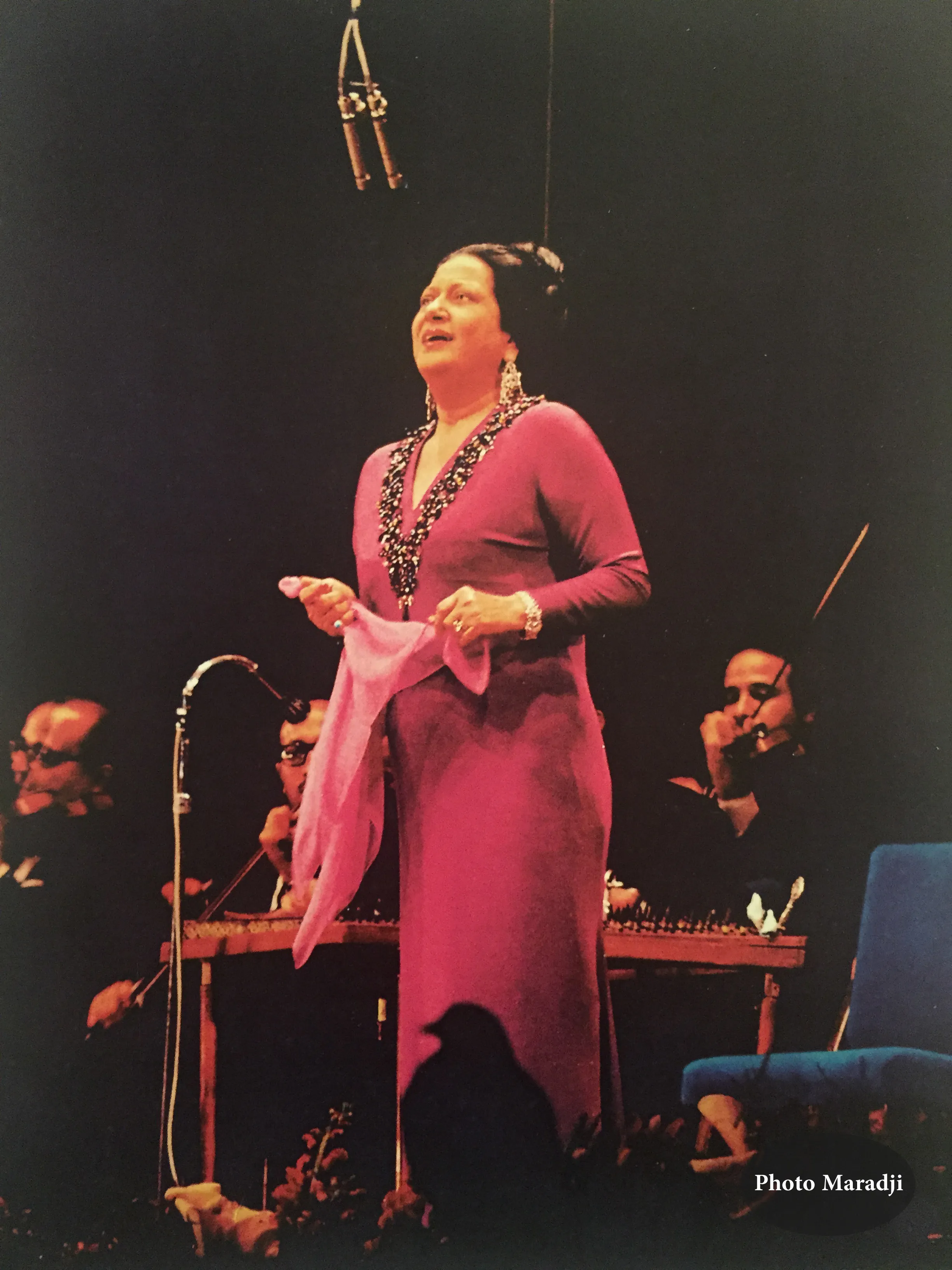
نقتبس هنا مقتطفات قصيرة لغرض الشرح والدراسة؛ فالكلمات الكاملة ما تزال محفوظة الحقوق. الشروح والمقال أدناه يرويان القصة كاملة.
السطور الموسومة بعلامة ذهبية تحمل شرحًا — اختر أيّها لقراءته.
الحب كله حبيته فيك، الحب كله
El-hobb kollo habbeito fik, el-hobb kollo
All the love there is, I loved it in you — all the love
The title line is an audit with only one entry: all the love that exists, spent on a single person; all of time, lived for him. Ahmad Shafiq Kamel — the poet of "Enta Omri" — returns to his great theme, the arithmetic of a lifetime, and pushes it past hyperbole into totality. The doubled "kollo" (all of it) at each line's end works like a seal pressed twice.
Premiered on 7 January 1971 at the Qasr el-Nil cinema in Cairo and carried by radio across the Arab world. It was Umm Kulthum's first concert after three months of mourning for Gamal Abdel Nasser, who had died the previous September — a return the press treated as national news. A song insisting that life is love, and nothing else, was offered to a country that badly needed permission to feel joy again.
وزماني كله أنا عشته ليك، زماني كله
W zamani kollo ana 'eshto lik, zamani kollo
And all my days, I lived them for you — all my days
واسقيني واملا واسقيني تاني
W es'ini w emla w es'ini tani
Pour for me, fill the cup, pour for me again —
"Pour for me, fill the cup, pour again" — the cupbearer of classical Arabic wine poetry summoned into a colloquial love song, with love itself in the goblet. Baligh Hamdi built the melody of this refrain as a returning cycle, an invitation the hall answered every time; in performance it became the song's engine of repetition and the audience's favorite demand.
من الحب، منك، من نور زماني
Men el-hobb, mennak, men nour zamani
Of love, of you, of the light of my days
اسقيني ياللي من يوم ما شفتك
Es'ini yalli men yom ma shoftak
Pour, you who — from the day I first saw you —
حسيت كأني اتخلقت تاني
Hasseit ka'enni etkhala't tani
Made me feel I had been created anew
أنا كنت إيه قبل ما أشوفك، أنا كنت إيه
Ana kont eih abl ma ashoufak, ana kont eih
What was I, before I saw you — what was I?
"What was I before I saw you?" reprises, almost a decade later, the central argument of "Enta Omri" by the same lyricist: the time before love is not merely inferior but unaccountable — a question with no answer. Kamel lets the singer audit her own existence and find nothing on the books until the beloved appears.
وكنت عايش يا حبيبي أيامي ليه
W kont 'ayesh ya habibi ayyami leih
And why, my love, was I even living my days?
طريق حياتي مشيته قبلك في ليل طويل
Tari' hayati mesheito ablak fe leil tawil
I walked my life's road before you through a long night
The road walked "through a long night" with no heart alongside — the lyric's one extended image of the loveless past. Night here is not the beloved's night of vigil, as in so much of her repertoire, but blank time: distance without witness. It sets up the excerpt's final movement, where time itself becomes the adversary.
لا قلب جنبي يحس بيا ولا طيف جميل
La alb gambi yehess beyya wala teif gamil
No heart beside me to feel me, no beautiful shadow near
خبيني من الزمن خبيني
Khabbini men el-zaman khabbini
Hide me from time itself, hide me
"Hide me from time" — the plea that gives the song its late-period gravity. After totalized love and recovered joy comes fear: that time will take the great happiness, or take the singer from it. Sung in 1971 by a woman past seventy, before an audience that had just buried its president, the line landed as more than romance — and her performances leaned into its urgency rather than away from it.
وبعيد عن عيونه داريني
W be'id 'an 'oyouno darini
Keep me sheltered, far from its eyes
عالفرحة الكبيرة يا خوفي لا ياخدها ولا يخليني
'Al-farha el-kbira ya khofi la yakhodha wala ykhallini
I fear for this great joy — that time will take it, or take me from it
معنى الأغنية
في 28 سبتمبر 1970 رحل جمال عبد الناصر، فتوقفت أم كلثوم عن الغناء وحدّت عليه ثلاثة أشهر، حتى قيل إنها فكرت في الاعتزال. ثم عادت في 7 يناير 1971 على مسرح دار سينما قصر النيل بأغنية جديدة نقلتها الإذاعة إلى العالم العربي كله: «الحب كله» من كلمات أحمد شفيق كامل — شاعر «إنت عمري» — ولحن بليغ حمدي، الذي حضر قبل الحفلة يشرف بنفسه على اللمسات الأخيرة. يقوم النص على حسابٍ كليّ لا يقبل القسمة: «الحب كله حبيته فيك، وزماني كله أنا عشته ليك» — فالعمر عند كامل لا يقاس بالسنين بل بالحب، وما قبل المحبوب «ليل طويل» بلا قلبٍ ولا طيف، وسؤال «أنا كنت إيه قبل ما أشوفك» يعيد حجة «إنت عمري» بعد سبع سنين: الزمن يبدأ من لحظة اللقاء. وفي لازمة «واسقيني واملا واسقيني تاني» يستدعي كامل ساقي الخمريات القديمة ليملأ الكأس حبًا لا خمرًا، فيصير الطرب نفسه شرابًا يُعاد صبّه كلما هتفت الصالة. ثم تأتي الرعشة الأخيرة: «خبيني من الزمن خبيني» — خوفٌ على الفرحة الكبيرة من يد الزمن، غنّته سيدة جاوزت السبعين أمام جمهور خارج من الحداد، فسمعه الناس مرثيةً ووعدًا في آن. وهكذا صارت «الحب كله» من آخر القمم الكبرى في تعاون أم كلثوم مع بليغ حمدي: احتفال بالحب بوصفه العمر كله، يحمل في داخله وعي الفناء الذي يجعل الاحتفال ضرورة.
أغانٍ ذات صلة
كل الأغانيألف ليلة وليلة
1969 · المقام Farahfaza
ألف ليلة وليلة (1969): ليل بليغ حمدي الطويل بصوت أم كلثوم — مقام الفرحفزا ومعنى الليلة الواحدة التي تعدل ألف ليلة، والسياق بعد النكسة.
يا مسهرني
1972 · المقام Rast
يا مسهرني (1972): لحن سيد مكاوي الوحيد لأم كلثوم وآخر ما كتبه لها أحمد رامي — عتاب الساهرين على مقام الراست. مقتطفات مشروحة ومقال.
هذه ليلتي
1968 · المقام Bayati
هذه ليلتي (1968): قصيدة جورج جرداق بلحن عبد الوهاب على مقام البياتي — ليلة عودة أم كلثوم إلى مسرح القاهرة بعد النكسة. المعنى والترجمة وقصة المطلع.
أمل حياتي
1965 · المقام Kurd
أمل حياتي (1965): كلمات أحمد شفيق كامل ولحن محمد عبد الوهاب على مقام الكرد — المعنى والترجمة وقصة اللقاء الثاني بين أم كلثوم وعبد الوهاب.
من الموسوعة
كل المقالاتمفاهيم
من أين تبدأ مع أم كلثوم: دليل المستمع
دليل المستمع الجديد إلى أم كلثوم: بأي الأغاني تبدأ، من إنت عمري إلى الأطلال، وكيف تستمتع بحفلات الطرب الطويلة وتسجيلاتها المتعددة.
تاريخ
إرث أم كلثوم
إرث أم كلثوم منذ 1975: بث إذاعي شهري لا ينقطع، إشادة موسيقيين غربيين، متحفها في جزيرة الروضة، حفلات الهولوغرام، وإعادة اكتشافها في عصر البث الرقمي.
الفرقة
التخت والفرقة
كيف نما مصاحبو أم كلثوم من تخت خماسي — عود وقانون وناي وكمان ورق — إلى الفرقة الكبيرة التي نسمعها في تسجيلاتها الأخيرة.