الأغاني
أراك عصي الدمع
Araka 'Asiyy al-Dam' (I See You Withholding Your Tears)
- السنة
- 1965
- الحقبة
- حقبة الوطنية 1952–1967
- كلمات
- أبو فراس الحمداني
- ألحان
- رياض السنباطي
- المقام
- Kurd
السطور الموسومة بعلامة ذهبية تحمل شرحًا — اختر أيّها لقراءته.
أراكَ عصيَّ الدمعِ شيمتُكَ الصبرُ
Araka 'asiyya d-dam'i, shimatuka s-sabru
I see you withhold your tears; endurance is your nature —
One of the most famous openings in Arabic poetry, and a paradox held in perfect balance: the poet catches himself refusing to weep, then puts his own stoicism on trial. He addresses himself in the second person — "I see you" — so the qasida begins as a man arguing with his own composure. A thousand years of listeners have heard in it the exact dignity of grief that will not perform itself.
Abu Firas al-Hamdani, warrior-prince of Aleppo and cousin of the emir Sayf al-Dawla, composed this poem in the 960s while a prisoner of the Byzantines — one of his Rumiyyat, the "poems from Roman lands." His ransom was slow to come, and many readers have always heard the reproach of the neglectful "beloved" as a veiled complaint to the cousin who left him waiting in captivity. The love poem carries a political wound.
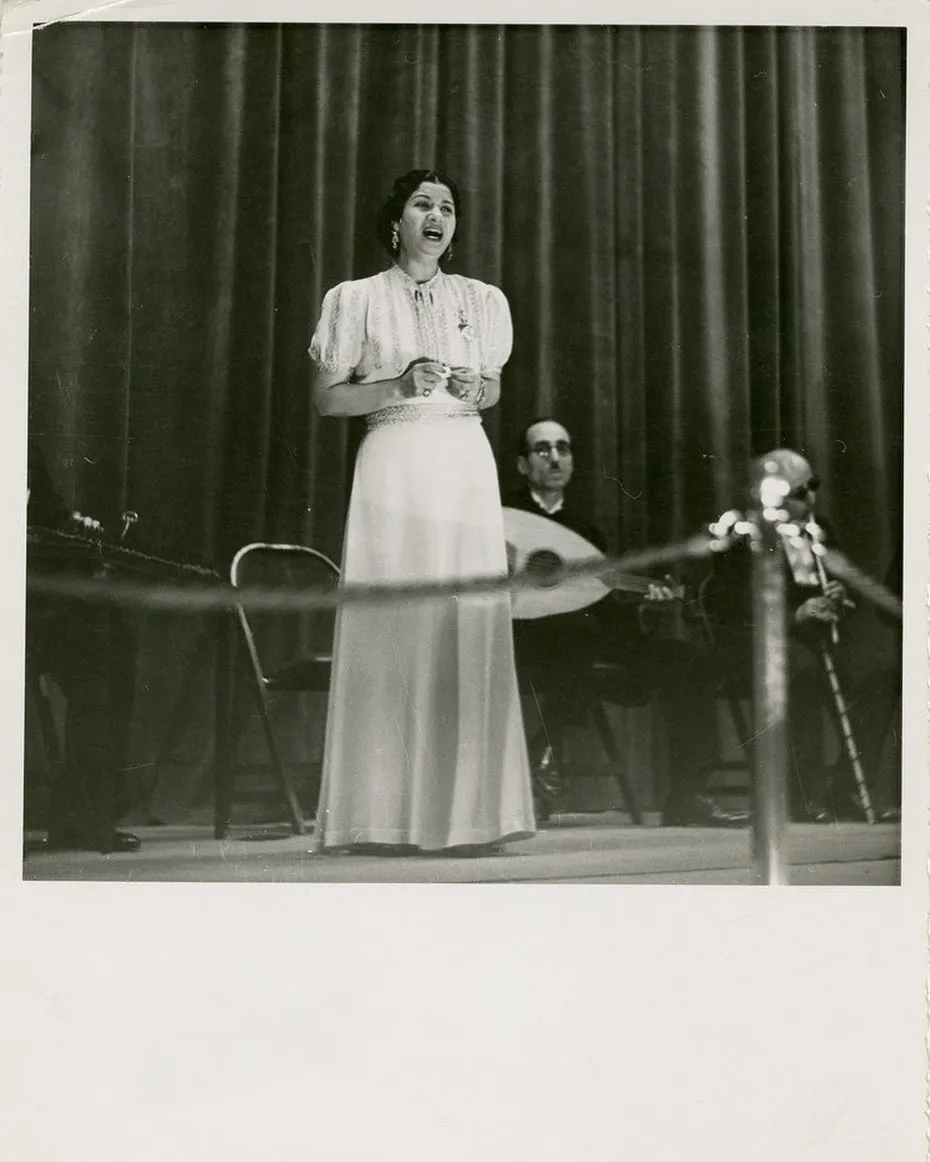
This was the third melodic life of the poem in her career alone. As a young singer in 1926 she recorded it in an older setting associated with the nineteenth-century master Abdo al-Hamuli; four decades later Riad al-Sunbati built her an entirely new composition in maqam Kurd, opening with a piano in the introduction — an almost scandalous novelty for the most classical of her composers, and virtually unique in her orchestra's sound.
أما للهوى نهيٌ عليكَ ولا أمرُ
A-ma li-l-hawa nahyun 'alayka wa-la amru
has love, then, no forbidding over you, and no command?
نعم أنا مشتاقٌ وعنديَ لوعةٌ
Na'am ana mushtaqun wa-'indiya law'atun
Yes — I am full of longing, an ache burns in me,
The diwan reads "bala" — the grammatically pointed way of answering a negative question — but Umm Kulthum sings "na'am," the plainer yes. It is a small, documented performance variant, and it softens the scholastic edge of the line into something a whole concert hall can feel: yes, I do long; I simply refuse to say for whom.
ولكنَّ مثلي لا يُذاعُ له سرُّ
Wa-lakinna mithli la yudha'u lahu sirru
but a man like me lets no secret of his be told.
إذا الليلُ أضواني بسطتُ يدَ الهوى
Idha l-laylu adwani basattu yada l-hawa
When night wears me down, I open my hand to passion
وأذللتُ دمعًا من خلائقِهِ الكبرُ
Wa-adhlaltu dam'an min khala'iqihi l-kibru
and humble a tear whose settled habit was pride.
The confession only night is allowed to witness. By day his tears' "settled habit is pride"; in darkness he forces them down like a rider breaking a proud animal. The verb adhlaltu — "I abased, I humbled" — is the vocabulary of conquest turned inward, exactly right for a captive knight whose only remaining battlefield is his own composure.
تكادُ تضيءُ النارُ بينَ جوانحي
Takadu tudi'u n-naru bayna jawanihi
The fire all but glows between my ribs
إذا هيَ أذكتها الصبابةُ والفكرُ
Idha hiya adhkat-ha s-sababatu wa-l-fikru
when yearning and brooding thought have fanned it bright.
معلِّلتي بالوصلِ والموتُ دونَهُ
Mu'allilati bi-l-wasli wa-l-mawtu dunahu
You who console me with a union death stands before:
إذا متُّ ظمآنًا فلا نزلَ القطرُ
Idha mittu zam'anan fa-la nazala l-qatru
if I die of this thirst, then let no rain ever fall.
A lover's curse of magnificent extravagance: if I die still thirsting for you, let rain never fall again — as if the sky itself should share the drought. Sunbati gives this hyperbole one of the melody's most exposed arcs, and in concert Umm Kulthum would return to "fa-la nazala l-qatru" again and again, each pass drier and more final than the last.
وفيتُ وفي بعضِ الوفاءِ مذلةٌ
Wafaytu wa-fi ba'di l-wafa'i madhallatun
I kept faith — though in some faithfulness there is abasement —
لفاتنةٍ في الحيِّ شيمتُها الغدرُ
Li-fatinatin fi l-hayyi shimatuha l-ghadru
with an enchantress of the quarter whose nature is betrayal.
تسائلني من أنتَ وهيَ عليمةٌ
Tusa'iluni man anta wa-hiya 'alimatun
She asks me, "Who are you?" — and she knows full well:
Here the qasida turns into theater. The beloved coyly asks the poet who he is — knowing perfectly well — and for two stanzas the song becomes pure dialogue. Umm Kulthum voices both parts, shifting color between the woman's feigned indifference and the man's wounded pride: a single voice staging a duet, one of the great dramatic set pieces in her repertoire.
وهل بشجٍ مثلي على حالِهِ نُكرُ
Wa-hal bi-shajin mithli 'ala halihi nukru
can a man so worn by sorrow go unrecognized?
فقلتُ كما شاءت وشاءَ لها الهوى
Fa-qultu kama sha'at wa-sha'a laha l-hawa
I answered as she wished, and as love itself wished:
قتيلُكِ قالت أيُّهم فهمُ كُثرُ
Qatiluki, qalat ayyuhum, fa-humu kuthru
"The one you slew." She said, "Which one? They are so many."
The cruelest, wittiest line in the poem. He surrenders his name — "your slain one" — and she answers with arithmetic: which of my victims? There are so many. Classical Arabic gallantry at its most barbed; audiences invariably erupted here, and she would often circle back to let the punchline land a second and third time.
وقلَّبتُ أمري لا أرى لي راحةً
Wa-qallabtu amri la ara li rahatan
I turned my case over and found no rest in it:
إذا البينُ أنساني ألحَّ بيَ الهجرُ
Idha l-baynu ansani alahha biya l-hajru
when distance grants forgetting, desertion presses close.
فقالت لقد أزرى بكَ الدهرُ بعدَنا
Fa-qalat laqad azra bika d-dahru ba'dana
She said, "Time has been hard on you since we parted."
فقلتُ معاذَ اللهِ بل أنتِ لا الدهرُ
Fa-qultu ma'adha Llahi, bal anti la d-dahru
I said, "God forbid — it was you, not time."
The ending Umm Kulthum's audiences waited for: accused of being worn down by time, the poet returns the verdict — it was you, not time. The 1965 recording closes on ever-fiercer restatements of "ma'adha Llah," turning a courtly retort into a thunderclap. It is the emotional inverse of the opening: the man who would not weep now names, at last, what wounded him.
معنى الأغنية
في عام 1965 وقفت أم كلثوم لتغني قصيدة مضى على كتابتها ألف عام. صاحبها أبو فراس الحمداني، فارس بني حمدان وابن عم سيف الدولة أمير حلب، كتبها وهو أسير في بلاد الروم بعدما تأخر فداؤه وطال انتظاره، فجاءت من رومياته التي يمتزج فيها كبرياء الفارس بلوعة العاشق. ومطلعها من أشهر المطالع في الشعر العربي كله: دمع يستعصي على النزول، وصبر صار طبعًا، وسؤال عتاب موجه إلى الهوى نفسه. وقد قرأها الناس على وجهين لا يلغي أحدهما الآخر: غزل صريح في امرأة عليمة بسطوتها، ورسالة معاتبة مقنعة إلى ابن العم الذي أبطأ في افتداء الشاعر من أسره، فكل بيت في الحبيبة الغادرة يصلح بيتًا في الزمن الغادر. ولم تكن هذه أول عهد أم كلثوم بالقصيدة؛ فقد سجلتها شابة عام 1926 بلحن قديم يرتبط باسم عبده الحامولي، ثم جاء رياض السنباطي بعد أربعة عقود ليصوغ لها لحنًا جديدًا كليًا على مقام الكرد، وافتتحه بمقدمة يظهر فيها البيانو، وهي خطوة غير مسبوقة في عالم السنباطي الشرقي الصافي أثارت دهشة النقاد والجمهور معًا. واختارت أم كلثوم من القصيدة الطويلة عشرة أبيات فقط، كلها من غزلها وحوارها، وتركت أبيات الفخر والحرب والأسر الصريح، فصار النص المغنى مسرحية كاملة في خمسة فصول: كتمان، فاعتراف مشروط، فقسم ولوعة، فحوار لاذع مع الحبيبة، فنهاية قاطعة تقول «معاذ الله بل أنتِ لا الدهر». وفي الحفلات كانت تعيد هذه الجملة الأخيرة بصيغ لا تتكرر، حتى غدت من أكثر خواتيمها رسوخًا في ذاكرة السامعين: براءة للزمن، وإدانة هادئة مدمرة لمن خان. هكذا التقى شاعر أسير من القرن العاشر بصوت القرن العشرين على مسافة ألف عام كاملة، فإذا القصيدة القديمة أحدث ما غنته أم كلثوم على الإطلاق، وإذا كبرياء الدمع لغة يفهمها كل جيل.
أغانٍ ذات صلة
كل الأغانيالأطلال
1966 · المقام Huzam
الأطلال (1966): النص الكامل المغنّى بشعر إبراهيم ناجي ولحن السنباطي على مقام الهزام — مع أبيات «الوداع» السبعة والترجمة والشروح.
فكروني
1966 · المقام Rast
فكروني (1966): كلمة عابرة توقظ نار الشوق — لحن محمد عبد الوهاب على مقام الراست وكلمات عبد الوهاب محمد. المعنى والترجمة وقصة الليلة الأولى.
هو صحيح الهوى غلاب
1960 · المقام Saba
هو صحيح الهوى غلاب (1960): النص الكامل لآخر ما كتب بيرم التونسي لأم كلثوم بلحن زكريا أحمد على مقام الصبا — أغنية المصالحة والوداع.
لسه فاكر
1960 · المقام Ajam
لسه فاكر (1960): لحن رياض السنباطي لكلمات عبد الفتاح مصطفى — رفضٌ مكتمل الكرامة بصوت أم كلثوم: «كان زمان». مقتطفات مشروحة وترجمة ومقال.
من الموسوعة
كل المقالاتمفاهيم
فن القصيدة
القصيدة أرفع ما غنّته أم كلثوم من الشعر الفصيح. جولة في سلوا قلبي والأطلال والرباعيات ونهج البردة، وفنّ رياض السنباطي في تلحين القصيد.
مفاهيم
فهم المقام
دليل مبسّط إلى نظام المقامات — أرباع الأصوات والسير والطرب — عبر أربعة مقامات من أغاني أم كلثوم: الراست والكرد والهزام والفرحفزا.
مفاهيم
من أين تبدأ مع أم كلثوم: دليل المستمع
دليل المستمع الجديد إلى أم كلثوم: بأي الأغاني تبدأ، من إنت عمري إلى الأطلال، وكيف تستمتع بحفلات الطرب الطويلة وتسجيلاتها المتعددة.