Rubaiyat el-Khayyam (The Quatrains of Khayyam) رباعيات الخيام
1950 · Maqam Rast
Rubaiyat el-Khayyam (1950): Omar Khayyam in Ahmed Rami's Arabic, set by Riad al-Sunbati in maqam Rast — meaning and translation of Umm Kulthum's masterpiece.
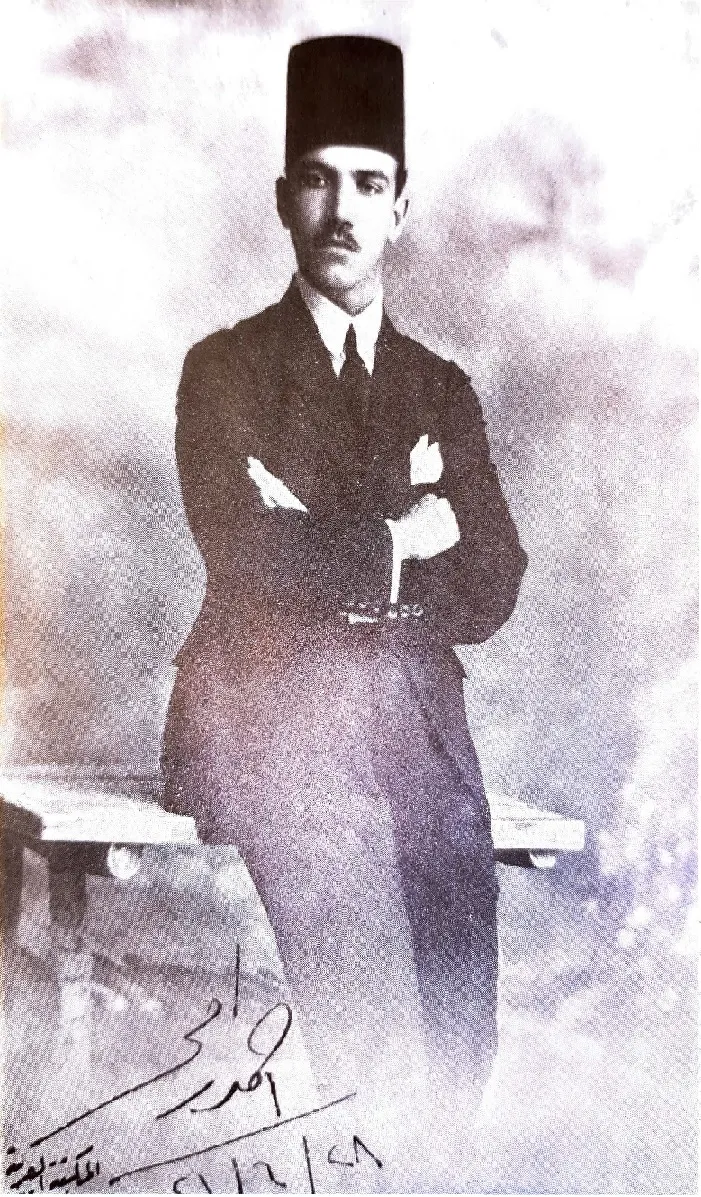
Lyricist
أحمد رامي
1892–1981
No poet's words passed Umm Kulthum's lips more often than Ahmed Rami's. Over nearly six decades he wrote her roughly a hundred and forty lyrics — by most counts close to half of everything she sang — from the tender colloquial songs of the 1920s to "Hayyart Albi Maak" (1961), his late collaboration with composer Riad Al-Sunbati. Cairo-born and trained as a teacher, Rami studied Oriental languages in Paris and translated the Rubaiyat of Omar Khayyam into Arabic verse; Umm Kulthum sang his translation in Al-Sunbati's celebrated setting. He met her in 1924, soon after her arrival in Cairo, and became her tutor as much as her lyricist, drilling her in classical poetry and the fine grain of Arabic diction. His signature is intimacy: plain, singable Egyptian Arabic that treats longing with complete seriousness, each lyric built around a single clear feeling that her voice could turn over for minutes at a time.
1950 · Maqam Rast
Rubaiyat el-Khayyam (1950): Omar Khayyam in Ahmed Rami's Arabic, set by Riad al-Sunbati in maqam Rast — meaning and translation of Umm Kulthum's masterpiece.
1959 · Maqam Kurd
Hagartak (1959): Ahmed Rami's paradox of forgetting, set by Riad al-Sunbati in maqam Kurd — meaning and translation of Umm Kulthum's 'I left you' explained.
1961
Hayyart Albi Maak (1961): Ahmed Rami and Riad al-Sunbati's late collaboration with Umm Kulthum — a study in longing, concealment, and live tarab practice.
1972 · Maqam Rast
Ya Msaharni (1972): Sayed Mekawy's only melody for Umm Kulthum and Ahmed Rami's last lyric — a sleepless reproach in maqam Rast. Excerpts and commentary.
History
Umm Kulthum made six musical films between 1936 and 1947, from Widad to Fatma. Why she went before the camera, the songs her films carried, and why she stopped.
History
Once a month, on the first Thursday, the Arab world stopped: the story of Umm Kulthum's live radio concerts and the ritual they became.
Biography
The life of Umm Kulthum: from a Nile Delta village and Quranic training to Cairo's radio age, the national concerts, and the funeral of the century.
History
The complete Umm Kulthum songs list, decade by decade from 1924 to 1973: every recorded song with its year, lyricist, and composer — nearly 320 works in all.
Concepts
The qasida — the classical Arabic ode — was the most prestigious form Umm Kulthum sang. A guide through Salou Qalbi, Al-Atlal, the Rubaiyat, and Nahj al-Burda.