Not every Umm Kulthum song is a song in the everyday sense. A good many are qasidas — settings of classical Arabic poems, sung in formal literary Arabic rather than Egyptian colloquial, and drawn from a poetic tradition older than Islam itself. To sing a qasida was the most demanding and the most prestigious thing an Arab singer could do, and Umm Kulthum built a large part of her authority on doing it better than anyone alive.
What a Qasida Is
The qasida (plural qasa’id) is the master form of classical Arabic poetry, its roots reaching back to the odes of pre-Islamic Arabia. In its strict form it is a long poem in a single meter, every line ending on the same rhyme from first verse to last — a discipline that can run for dozens of couplets without the rhyme ever changing. Each line divides into two balanced halves, the second half landing on the binding rhyme like a bell struck at the end of every stroke.
Crucially, a qasida is composed in fus’ha, the elevated classical Arabic of the Quran and the literary canon, not in the everyday spoken dialect. This is what separates it from the ughniya, the ordinary colloquial song, and from the monologue, the dramatic first-person form popular in Umm Kulthum’s early Cairo years. The qasida carries the weight of fourteen centuries of poetry; to set one to music is to answer to that entire tradition.
Why It Carried Such Prestige
In Arab culture the poet has never been merely an entertainer. Poetry is the highest of the traditional arts, the memory of the language, the vessel in which a people keeps its finest expression. A singer who could take a great poem and make it live in sound was therefore not decorating the words but honoring them — and being measured against them.
The qasida also flattered its audience. To follow a classical ode requires an educated ear: knowledge of the vocabulary, the imagery, the poet. When Umm Kulthum sang fus’ha to a hall of thousands and the hall answered line for line, it was a public demonstration that this literary inheritance still belonged to everyone, not only to scholars. That is a large part of why her qasidas felt like national occasions.
The Poets and the Composer
Umm Kulthum’s qasidas draw on the giants of the neoclassical revival and beyond. Ahmed Shawqi — crowned Amir al-Shu’ara, “Prince of Poets” — supplied some of her grandest, from the love-and-loss ode Salou Qalbi to the devotional Nahj al-Burda, a modern echo of the medieval mantle-poem in praise of the Prophet. The Apollo-school romantic Ibrahim Nagi wrote Al-Atlal, whose very title — “the ruins” — invokes the oldest of qasida openings, the poet weeping over the abandoned campsite of the beloved. And the tenth-century prince-poet Abu Firas al-Hamdani, writing from a Byzantine prison a thousand years earlier, is the voice behind Araka ‘Asiyy al-Dam — proof that a qasida’s age was no barrier to the stage.
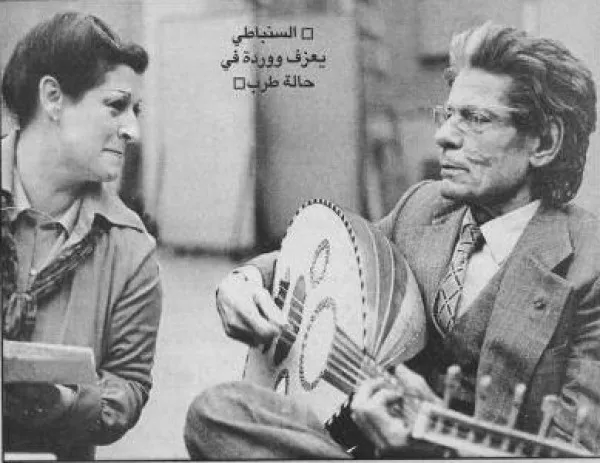
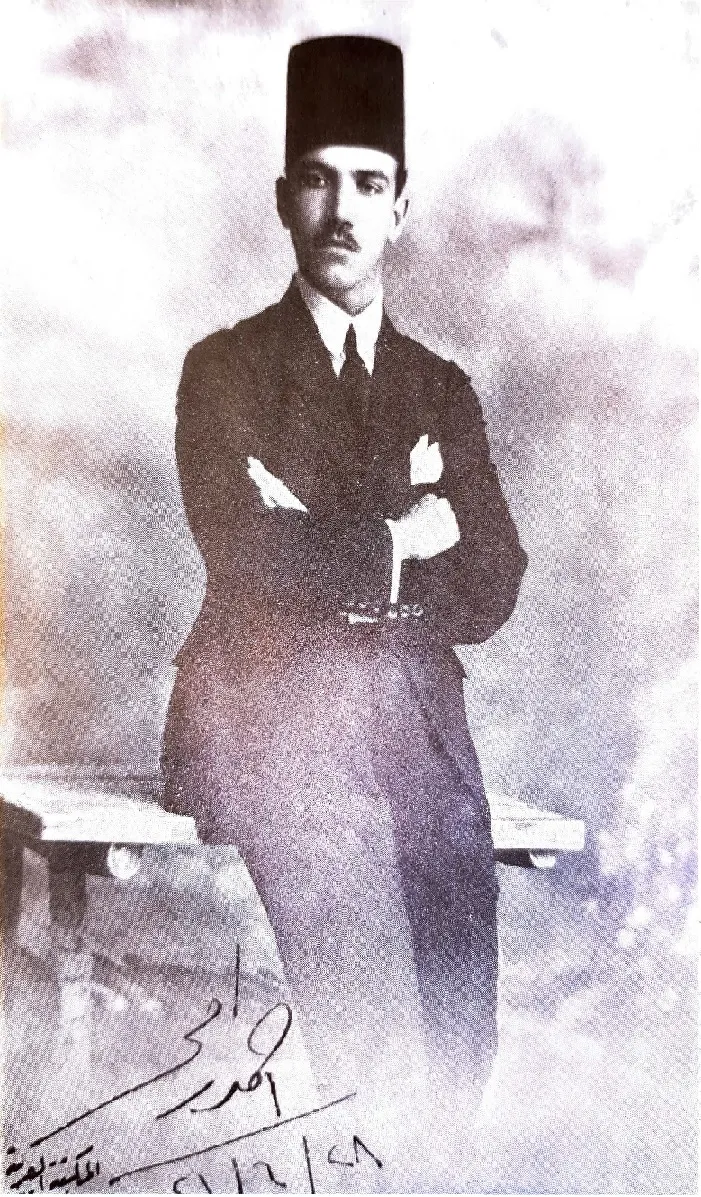
One name recurs beneath nearly all of them: Riad al-Sunbati. More than any other composer he specialized in setting classical verse for Umm Kulthum, and his gift was to let the poem lead — to shape a melody that clarified the meter and the meaning rather than fighting them. Even the Rubaiyat el-Khayyam, Ahmed Rami’s Arabic rendering of the Persian quatrains of Omar Khayyam, became under Sunbati’s hand a sustained meditation on time and mortality that many count among her supreme achievements.
Singing the Classical Line
The qasida makes singular demands on a voice. Fus’ha diction must be flawless — every case-ending and long vowel exact — because an educated audience hears mistakes as they would hear wrong notes. The long, symmetrical lines reward enormous breath and the patience to let a single verse unfold. And because the words are dense and revered, the singer cannot hide behind rhythm or catchy refrain; the whole art is in illuminating the poem.
This is precisely the terrain on which Umm Kulthum was unmatched. She would take one line of Shawqi or Nagi and turn it over ten, fifteen ways, each repetition finding another shade of the meaning, until the poem seemed to have been waiting all its life to be sung exactly like this. In her qasidas the two highest arts of the culture — its poetry and its music — meet as equals, and it is no accident that these are the recordings her most devoted listeners return to first.