Songs
حب إيه Hob Eih (What Kind of Love?)
- Year
- 1960
- Lyricist
- Abdel Wahab Mohamed
- Composer
- Baligh Hamdi
- Maqam
- Bayati
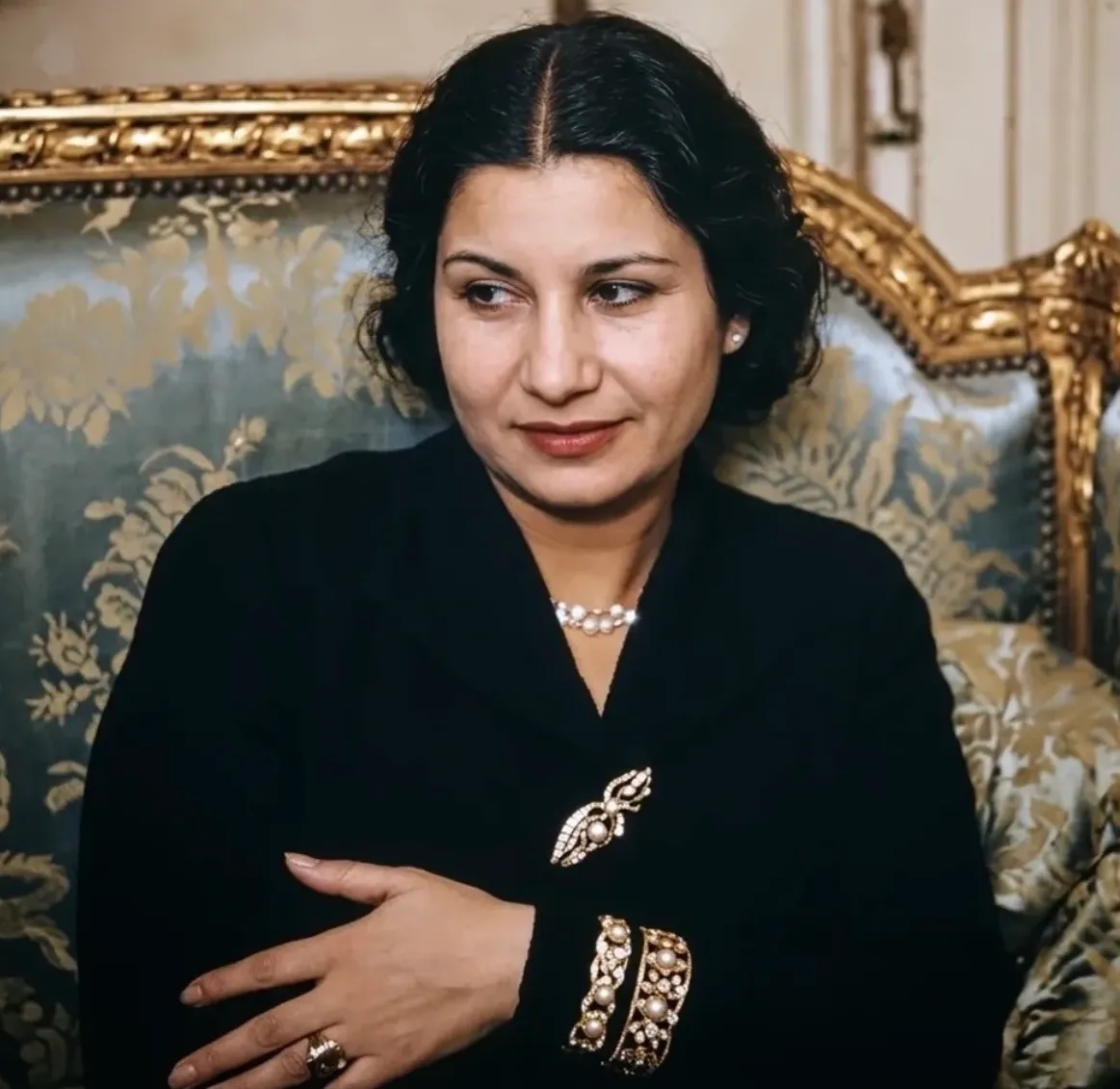
Short excerpts are quoted here for commentary and study; the complete lyrics remain under copyright. The annotations and the essay below tell the whole story.
Lines marked with a gold ornament carry a note — select one to read it.
حب إيه اللي انت جاي تقول عليه
Hobb eih elli enta gayy te'oul 'aleih
What love is this you come to speak of?
The opening is not poetry from a divan but a retort from the street — the kind of sarcastic challenge thrown in a quarrel: "what love are you even talking about?" Critics who expected the singer of Shawqi and Rami to open an evening with high verse were unsettled, and the critical literature records real disapproval of the register. That friction was the point: the indignation is real, spoken language doing the work of rhetoric.
First sung on 1 December 1960, opening night of her winter season. The composer, Baligh Hamdi, was twenty-nine — introduced to Umm Kulthum by Mohamed Fawzi at a Cairo evening gathering, summoned to her Zamalek villa, and reportedly finished the setting within about ten days. In rehearsals she is remembered calling him "ya ibni" — my son. It was the first of ten scores he would write for her.
انت عارف قبله معنى الحب إيه
Enta 'aref ablo ma'na el-hobb eih
Did you ever, before, know what love even means?
لما تتكلم عليه.. حب إيه
Lamma tetkallem 'aleih.. hobb eih
When you talk about it — what love?
انت ما بينك وبين الحب دنيا
Enta ma-beinak w bein el-hobb donya
Between you and love lies a whole world
The rebuke turns into measurement: between the addressee and love lies a "donya" — a whole world — unreachable "even in your imagination." The colloquial hyperbole works like a surveyor's report; before she says what her own love is, she establishes the distance the other has never crossed.
دنيا ما تطولها ولا حتى بخيالك
Donya ma-tetoulha wala hatta be-khayalak
A world you could not reach even in imagination
أما نفس الحب عندي حاجة تانية
Amma nafs el-hobb 'andi haga tanya
But love, as I know it, is something else —
حاجة أغلى من حياتي ومن جمالك
Haga aghla men hayati w men gamalak
Something dearer than my life, and than your beauty
"Dearer than my life, and than your beauty" — the line quietly concedes the beloved's beauty in the same breath that it demotes it. Love outranks both the lover's existence and the beloved's charm: the song's central claim, delivered as a price comparison in everyday speech.
انت فين والحب فين
Enta fein w el-hobb fein
Where are you, and where is love?
ظالمه ليه دايماً معاك
Zalmo leih dayman ma'ak
Why do you always do it such wrong?
دا انت لو حبيت يومين
Da enta law habbeit yomein
Had you truly loved for just two days
كان هواك خلاك ملاك
Kan hawak khallak malak
That love would have made you an angel
The most quoted couplet: two days of real love "would have made you an angel." Reproach doubles as a theory of love — love as a morally transforming force, so that the beloved's cruelty becomes proof he never actually loved. The accusation and the definition arrive together.
كنت باخلص لك في حبي بكل قلبي
Kont bakhles-lak fe hobbi be-koll albi
I was faithful to you in my love, with all my heart
At "I was faithful to you with all my heart" the music softens with the words. Analysts of the score note that Baligh, working in maqam Bayati, prepares this passage by shifting toward a minor coloration on the same tonic — a change of light rather than of key signature — so that the voice steps out of sarcasm into wounded tenderness. It is the moment the quarrel admits it is a love song.
What this song means
In 1960 the composer Mohamed Fawzi brought a twenty-nine-year-old protégé to meet Umm Kulthum at a Cairo evening gathering. The young man was Baligh Hamdi, and the melody he sang for her that night was “Hob Eih.” She asked him to call on her the next day at her villa in Zamalek; within about ten days, as the story was later told in the Egyptian press, the setting was complete. On 1 December 1960 she opened her winter season with it — placing it second on the program, after the previous year’s “Hagartak,” as if formally introducing the new composer to her public. In rehearsals she called him ya ibni, my son. The generational symbolism escaped no one.
The lyric, by Abdel Wahab Mohamed, begins with a phrase lifted straight from the street: “What love are you talking about?” — the sarcastic retort of a quarrel, not a couplet from a divan. Some critics bristled; the singer of Ahmed Shawqi and Ahmed Rami, they felt, should not open an evening in the language of the alley. But the demotic register is precisely the song’s engine. This is an indictment, and indictments are delivered in plain speech: you talk of love, yet you never knew what it means; between you and love lies a whole world you could not reach even in imagination.
What follows is a lover’s cross-examination in three movements. First the interrogation — the title phrase hurled back at the beloved. Then the measurement: her own love is “something else,” dearer than her life and than his beauty, a valuation that concedes the beauty while demoting it. Finally the wounded ledger: “I was faithful to you in my love, with all my heart.” The reproach keeps collapsing into confession, and the song’s most famous couplet fuses the two — had he loved for just two days, “that love would have made you an angel.” Cruelty becomes evidence: whoever remains unkind has simply never loved. The accusation carries its own theory of love inside it.
Baligh set the text in maqam Bayati, opening with a cry of denunciation and capping the introduction with a higher one. Analysts of the score point to its most telling gesture: at the passage of remembered fidelity, the harmony leans into a minor coloration on the same tonic — a shift of light rather than of ground — so the voice steps out of sarcasm into tenderness. Formally the writing still stands in the line of Riad al-Sunbati’s concert manner, but the directness, the singable bitterness, the pop instincts underneath the tarab architecture, were new — and they were Baligh’s signature from the first bar.
The success opened a door that never closed. Baligh Hamdi went on to write ten scores for Umm Kulthum — “Ansak,” “Sirat el-Hob,” “Alf Leila wa Leila,” “El Hob Kollo” among them — competing on equal footing with al-Sunbati and Mohammed Abdel Wahab, and pulling a younger audience into her Thursday-night rituals. “Hob Eih” is where that alliance begins: an aging institution and an ambitious newcomer meeting halfway, in a lyric about the difference between talking of love and knowing it.
Related songs
All songsFakkarouni (They Reminded Me) فكروني
1966 · Maqam Rast
Fakkarouni (1966): a chance remark rekindles a buried love — Abdel Wahab's maqam Rast setting, the famous one-word hook, meaning & translation of Umm Kulthum's classic.
Baeed Anak (Far From You) بعيد عنك
1965 · Maqam Bayati
Baeed Anak (1965): Baligh Hamdi's maqam Bayati hit for Umm Kulthum — 'far from you, my life is torment.' Annotated excerpts, translation, and the song's story.
Sirat El Hob (The Story of Love) سيرة الحب
1964
Sirat El Hob (1964): Umm Kulthum's confession of a lifetime spent fearing love — Morsi Gamil Aziz's lyric, Baligh Hamdi's setting, meaning & translation.
El Hob Kollo (All the Love) الحب كله
1971
El Hob Kollo (1971): Umm Kulthum returns after mourning Nasser — Ahmad Shafiq Kamel's lyric, Baligh Hamdi's score. Meaning and translation of 'all the love'.
From the wiki
All articlesConcepts
Where to Start with Umm Kulthum: A Listener's Guide
New to Umm Kulthum? A step-by-step listening guide: which songs to start with, from Enta Omri to Al-Atlal, and how to enjoy her hour-long live tarab recordings.
History
The Legacy of Umm Kulthum
Umm Kulthum's legacy since 1975: monthly radio broadcasts, praise from Bob Dylan, the Cairo museum on Roda Island, hologram concerts, and streaming rediscovery.
The Ensemble
The Takht and the Orchestra
How Umm Kulthum's accompaniment grew from the five-player takht — oud, qanun, nay, violin, riqq — into the sweeping firqa heard on her later recordings.