الأغاني
سلوا قلبي
Salou Qalbi (Ask My Heart)
- السنة
- 1946
- كلمات
- أحمد شوقي
- ألحان
- رياض السنباطي
- المقام
- Rast
السطور الموسومة بعلامة ذهبية تحمل شرحًا — اختر أيّها لقراءته.
سَلوا قَلبي غَداةَ سَلا وَثابا — لَعَلَّ عَلى الجَمالِ لَهُ عِتابا
Salu qalbi ghadata sala wa-thaba — la'alla 'ala l-jamali lahu 'itaba
Ask my heart, the morning it forgot and then relapsed — perhaps it holds some reproach against beauty
The command is plural — "ask, all of you, my heart" — as if the poet were summoning witnesses to a hearing. The bayt turns on a jinas between sala ("it forgot") and thaba ("it relapsed"): forgetting and relapse packed into a single breath. Sunbati opens in maqam Rast, the most foursquare and luminous of the Arab modes — confession delivered standing up straight.
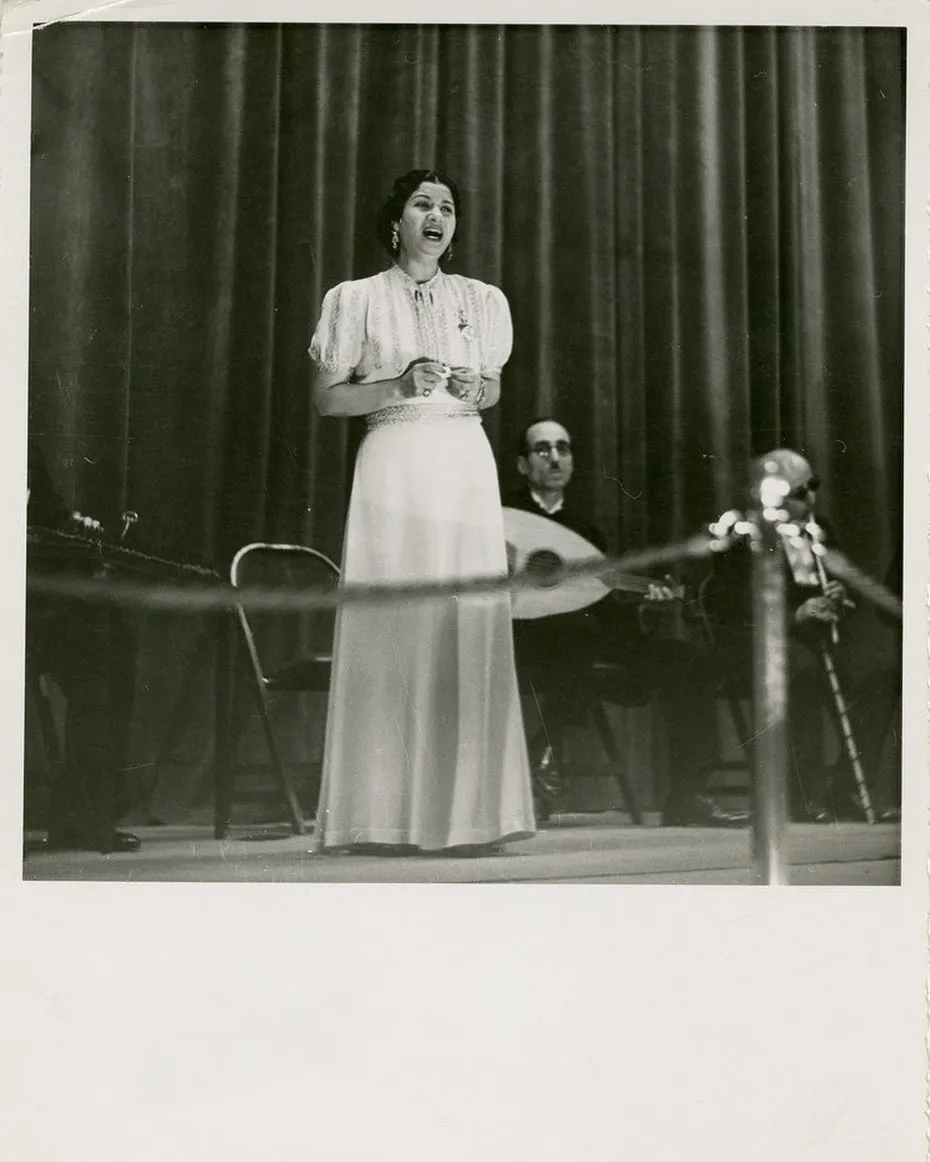
The premiere belongs to January 1946, when Umm Kulthum sang the qasida at celebrations honoring King Abdulaziz Al Saud's state visit to Egypt — for that one occasion she added verses of royal salutation that never entered the canonical text. Shawqi himself had died in 1932; like much of her Shawqi repertoire, this is a poet sung in his absence.
وَيُسأَلُ في الحَوادِثِ ذو صَوابٍ — فَهَل تَرَكَ الجَمالُ لَهُ صَوابا
Wa-yus'alu fi l-hawadithi dhu sawabin — fa-hal taraka l-jamalu lahu sawaba
In hard times people consult the clear-headed man — but has beauty left him any clear head at all?
A second jinas, wickeder than the first: sawab as "sound judgment" against sawaba "any judgment left." The clear-headed man is the one you consult in a crisis — but beauty has already emptied his head. Shawqi's wordplay is never mere decoration; it argues that love and reason share one vocabulary and cannot both keep it.
وَكُنتُ إِذا سَأَلتُ القَلبَ يَومًا — تَوَلّى الدَمعُ عَن قَلبي الجَوابا
Wa-kuntu idha sa'altu l-qalba yawman — tawalla d-dam'u 'an qalbi l-jawaba
Whenever I put a question to my heart — my tears would take the answer upon themselves
وَلي بَينَ الضُلوعِ دَمٌ وَلَحمٌ — هُما الواهي الَّذي ثَكِلَ الشَبابا
Wa-li bayna d-dulu'i damun wa-lahmun — huma l-wahi lladhi thakila sh-shababa
Within my ribs there is blood, there is flesh — one frail thing together, mourning its own lost youth
تَسَرَّبَ في الدُموعِ فَقُلتُ وَلّى — وَصَفَّقَ في الضُلوعِ فَقُلتُ ثابا
Tasarraba fi d-dumu'i fa-qultu walla — wa-saffaqa fi d-dulu'i fa-qultu thaba
It drained away in tears, and I said: it is gone — then it beat against my ribs, and I said: it has returned
وَلَو خُلِقَت قُلوبٌ مِن حَديدٍ — لَما حَمَلَت كَما حَمَلَ العَذابا
Wa-law khuliqat qulubun min hadidin — lama hamalat kama hamala l-'adhaba
Had hearts been forged out of iron — they could not have carried what mine has carried of torment
وَلا يُنبيكَ عَن خُلُقِ اللَيالي — كَمَن فَقَدَ الأَحِبَّةَ وَالصَحابا
Wa-la yunbika 'an khuluqi l-layali — ka-man faqada l-ahibbata wa-s-sahaba
And no one can tell you the true nature of the nights — like one who has lost his loved ones and companions
فَمَن يَغتَرُّ بِالدُنيا فَإِنّي — لَبِستُ بِها فَأَبلَيتُ الثِيابا
Fa-man yaghtarru bi-d-dunya fa-inni — labistu biha fa-ablaytu th-thiyaba
Let others be deceived by this world — I have worn its garments and worn them through
The worn-garment image announces the poem's pivot from ghazal to hikma, the classical register of hard-won wisdom: the world as a robe the poet has worn to rags. Umm Kulthum drops her ornamentation here to almost declarative plainness — the sound of experience rather than passion.
جَنَيتُ بِرَوضِها وَردًا وَشَوكًا — وَذُقتُ بِكَأسِها شُهدًا وَصابا
Janaytu bi-rawdiha wardan wa-shawkan — wa-dhuqtu bi-ka'siha shuhdan wa-saba
In its garden I gathered both rose and thorn — and from its cup I tasted honey and bitter aloes
فَلَم أَرَ غَيرَ حُكمِ اللَهِ حُكمًا — وَلَم أَرَ دونَ بابِ اللَهِ بابا
Fa-lam ara ghayra hukmi llahi hukman — wa-lam ara duna babi llahi baba
So I have found no judgment but the judgment of God — and I have found no door short of the door of God
The theological hinge of the sung text: two negations ("no judgment... no door") that close every exit except one. From here the poem moves irreversibly toward the Prophet. Sunbati marks the turn with a modulation away from Rast's home ground, letting the melody wander before it settles — doubt performed, then dissolved.
وَأَنَّ البِرَّ خَيرٌ في حَياةٍ — وَأَبقى بَعدَ صاحِبِهِ ثَوابا
Wa-anna l-birra khayrun fi hayatin — wa-abqa ba'da sahibihi thawaba
And righteousness is best while a man still lives — and outlasts its doer as enduring reward
نَبِيُّ البِرِّ بَيَّنَهُ سَبيلًا — وَسَنَّ خِلالَهُ وَهَدى الشِعابا
Nabiyyu l-birri bayyanahu sabilan — wa-sanna khilalahu wa-hada sh-shi'aba
The Prophet of righteousness marked it out as a road — traced its ways and guided through the mountain passes
وَكانَ بَيانُهُ لِلهَديِ سُبلًا — وَكانَت خَيلُهُ لِلحَقِّ غابا
Wa-kana bayanuhu li-l-hadyi sublan — wa-kanat khayluhu li-l-haqqi ghaba
His eloquence became highways for guidance — and his horses a forest of lances around the truth
وَعَلَّمَنا بِناءَ المَجدِ حَتّى — أَخَذنا إِمرَةَ الأَرضِ اِغتِصابا
Wa-'allamana bina'a l-majdi hatta — akhadhna imrata l-ardi ghtisaba
He taught us how glory is built — until we seized command of the earth by storm
وَما نَيلُ المَطالِبِ بِالتَمَنّي — وَلَكِن تُؤخَذُ الدُنيا غِلابا
Wa-ma naylu l-matalibi bi-t-tamanni — wa-lakin tu'khadhu d-dunya ghilaba
Goals are never attained by wishing — the world is only ever taken by striving
The most famous line Shawqi ever wrote, and arguably the most quoted bayt of twentieth-century Arabic verse: "goals are never attained by wishing — the world is only ever taken by striving." Sung in 1946, between a world war and an empire's exit, it landed as political instruction. Audiences made her repeat it, schoolteachers set it as copywork, and it survives as a proverb people cite without knowing they are quoting a song.
وَما اِستَعصى عَلى قَومٍ مَنالٌ — إِذا الإِقدامُ كانَ لَهُم رِكابا
Wa-ma sta'sa 'ala qawmin manalun — idha l-iqdamu kana lahum rikaba
And no prize has ever defied a people — who make boldness the mount they ride
The companion aphorism completes the couplet: iqdam — boldness, forward motion — as the riding mount of nations. The metaphor is cavalry, the meter is wafir's rolling gait, and Sunbati's setting drives the rhythm forward so that the music itself seems to advance on the objective.
أَبا الزَهراءِ قَد جاوَزتُ قَدري — بِمَدحِكَ بَيدَ أَنَّ لِيَ اِنتِسابا
Aba z-Zahra'i qad jawaztu qadri — bi-madhika bayda anna liya ntisaba
Father of al-Zahra, in praising you I have overreached my station — and yet I claim a kinship of my own
"Father of al-Zahra" — the Prophet addressed through his daughter Fatima. With this apostrophe the qasida openly becomes madih nabawi, prophetic praise, and the singer's whole posture changes: the tone of the lover and the moralist gives way to the supplicant. That a national diva sang this on the public stage, to rapt secular audiences, says much about how naturally devotion and high art shared one room in 1940s Egypt.
فَما عَرَفَ البَلاغَةَ ذو بَيانٍ — إِذا لَم يَتَّخِذكَ لَهُ كِتابا
Fa-ma 'arafa l-balaghata dhu bayanin — idha lam yattakhidhka lahu kitaba
For no master of speech has ever known eloquence — unless he took you for his book
مَدَحتُ المالِكينَ فَزِدتُ قَدرًا — فَحينَ مَدَحتُكَ اِقتَدتُ السَحابا
Madahtu l-malikina fa-zidtu qadran — fa-hina madahtuka qtadtu s-sahaba
I praised the kings, and my standing grew — but when I praised you, I led the rainclouds by the rein
Shawqi spent his career as court poet to Egypt's khedives — "I praised the kings" is autobiography, not figure. The startling image that follows (praising the Prophet, he "led the rainclouds by the rein") outbids every royal panegyric he ever wrote: generosity itself, the rain, walks behind this praise like a led animal.
سَأَلتُ اللَهَ في أَبناءِ ديني — فَإِن تَكُنِ الوَسيلَةَ لي أَجابا
Sa'altu llaha fi abna'i dini — fa-in takuni l-wasilata li ajaba
I have petitioned God for the children of my faith — and if you are my intercessor, He will answer
وَما لِلمُسلِمينَ سِواكَ حِصنٌ — إِذا ما الضَرُّ مَسَّهُمُ وَنابا
Wa-ma li-l-muslimina siwaka hisnun — idha ma d-durru massahumu wa-naba
The Muslims have no fortress but you — when harm has touched them and calamity bitten deep
معنى الأغنية
حين غنّت أم كلثوم «سلوا قلبي» عام 1946 كان أحمد شوقي قد رحل قبل ذلك بأربعة عشر عامًا، فجاء الغناء أشبه بمصافحة بين صوت الأمة وأمير شعرائها عبر حجاب الغياب. اختارت من قصيدته الطويلة — اثنين وسبعين بيتًا على بحر الوافر — واحدًا وعشرين بيتًا رتّبت رحلةً كاملة: من الغزل الذي يستجوب القلب بين السلوّ والانتكاس، إلى حكمة من لبس الدنيا فأبلى ثيابها، إلى مديح نبوي يليق بختام الطريق. وصاغ رياض السنباطي اللحن على مقام الراست، مقام الوضوح والاعتدال، فبدت القصيدة كأنها تُتلى في محراب من نور لا في صالة غناء. وكان العرض الأول في يناير 1946 ضمن احتفالات مصر بزيارة الملك عبد العزيز آل سعود، وأضافت أم كلثوم لتلك المناسبة وحدها أبيات تحية للضيف لم تدخل النص المتداول بعد ذلك. ولعل أشهر لحظات الأغنية بيتُ الحكمة الخالد: «وما نيل المطالب بالتمني ولكن تؤخذ الدنيا غلابا». قيل البيت قبل عقود، لكنه وُلد من جديد في لحظة غنائه؛ فمصر الخارجة من الحرب العالمية الثانية، المتطلعة إلى الجلاء والاستقلال، سمعت فيه بيانًا سياسيًا مغنّى، وردّده الطلاب والخطباء حتى صار مثلًا يجري على الألسنة بلا إسناد. وهكذا فعل الغناء بالشعر ما لا تفعله دواوين: نقله من الورق إلى الوجدان العام. أما القسم الأخير فيكشف سرّ القصيدة كلها؛ إذ يلتفت شوقي إلى «أبي الزهراء» معترفًا بأنه جاوز قدره بمدحه، وأن البلاغة نفسها لا تُعرف إلا به كتابًا. وهنا يبلغ صوت أم كلثوم ذروة خشوعه، فتنتقل من مقام العاشق إلى مقام المتوسّل، ويكتمل القوس الذي بدأ بسؤال القلب وانتهى بحصن المسلمين حين ينوب الضر. «سلوا قلبي» ليست أغنية دينية خالصة ولا غزلية خالصة، بل درس في وحدة التجربة: الحب والحكمة والإيمان أطوار لقلب واحد، سألوه فأجاب الدمع أولًا، ثم أجابت الحكمة، ثم أجاب الدعاء.
أغانٍ ذات صلة
كل الأغانيولد الهدى
1949 · المقام Rast
ولد الهدى (1949): همزية شوقي في المولد النبوي بلحن السنباطي على مقام الراست — أجرأ ما غنّته أم كلثوم عن الإيمان والعدل والمساواة.
مصر تتحدث عن نفسها
1951 · المقام Rast
مصر تتحدث عن نفسها (1951): النص الكامل لقصيدة حافظ إبراهيم بلحن رياض السنباطي على مقام الراست — مصر تتكلم بلسانها بصوت أم كلثوم.
إلى عرفات الله
1951 · المقام Huzam
إلى عرفات الله (1951): قصيدة أحمد شوقي في الحج بلحن رياض السنباطي على مقام الهزام — قصة نشيد الحجيج بصوت أم كلثوم مع الشرح والترجمة.
نهج البردة
1946 · المقام Rahat al-Arwah
نهج البردة (1946): معارضة شوقي لبردة البوصيري بلحن السنباطي على مقام راحة الأرواح — ذروة المديح النبوي في فن أم كلثوم، معنىً وسياقًا.
من الموسوعة
كل المقالاتمفاهيم
من أين تبدأ مع أم كلثوم: دليل المستمع
دليل المستمع الجديد إلى أم كلثوم: بأي الأغاني تبدأ، من إنت عمري إلى الأطلال، وكيف تستمتع بحفلات الطرب الطويلة وتسجيلاتها المتعددة.
مفاهيم
فن القصيدة
القصيدة أرفع ما غنّته أم كلثوم من الشعر الفصيح. جولة في سلوا قلبي والأطلال والرباعيات ونهج البردة، وفنّ رياض السنباطي في تلحين القصيد.
تاريخ
قائمة أغاني أم كلثوم الكاملة
قائمة أغاني أم كلثوم كاملة من 1924 إلى 1973، عقدًا بعد عقد: كل أغنية بسنتها وكاتبها وملحنها — قرابة 320 عملًا مع أغاني الأفلام الستة.