Enta Omri (You Are My Life) إنت عمري
1964 · Maqam Kurd
Enta Omri (1964): Umm Kulthum meets Mohammed Abdel Wahab in the 'meeting of the clouds' — history, maqam Kurd, and the meaning of her most famous love song.
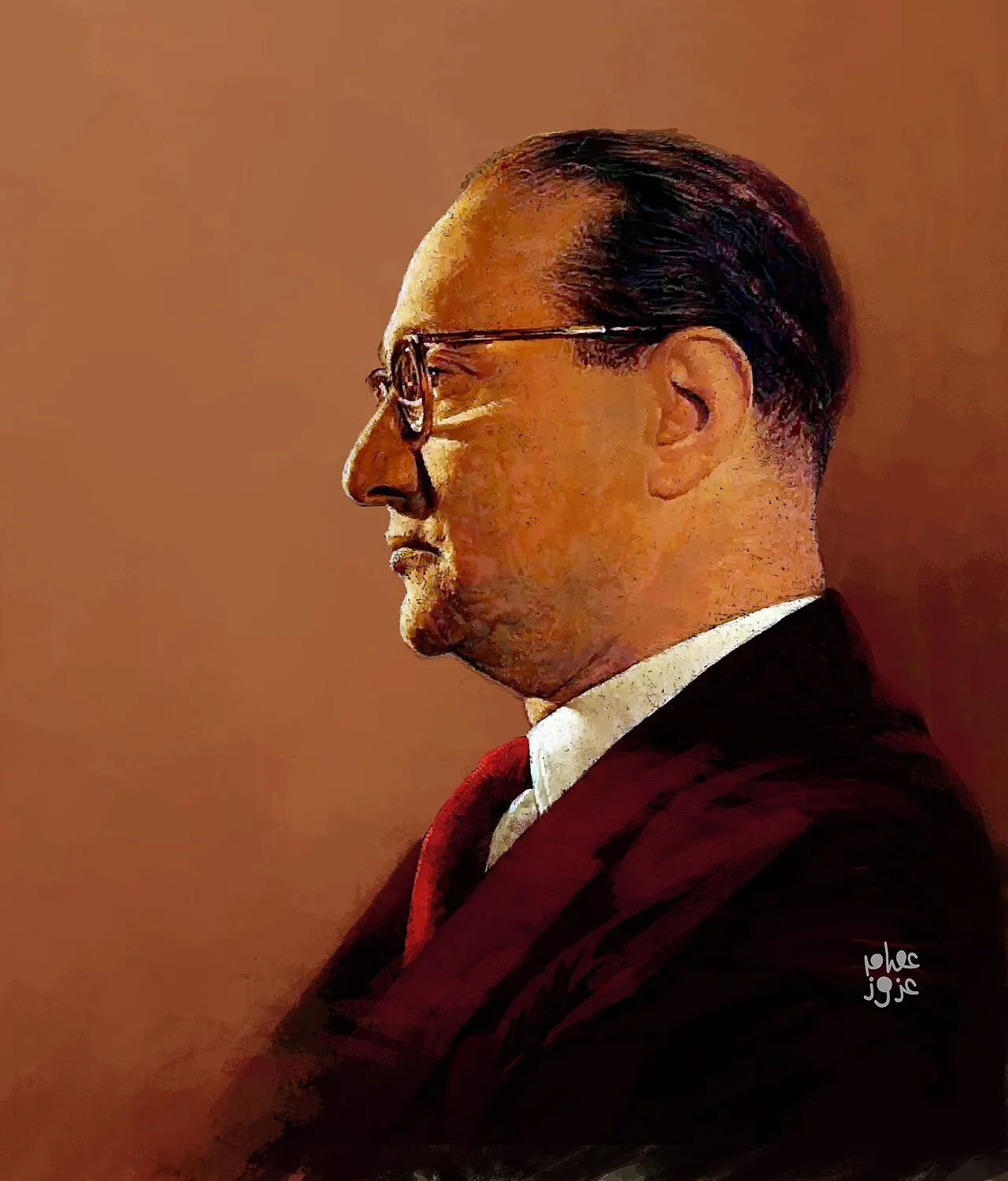
Composer
محمد عبد الوهاب
1902–1991
Mohammed Abdel Wahab was Umm Kulthum's great rival long before he became her collaborator. Singer, film star and the most restlessly modern composer of his generation, he spent three decades as the other pole of Egyptian music — until 1964, when "Enta Omri" united them at last, in what the press celebrated as "the meeting of the clouds." He went on to compose ten songs for her, including "Amal Hayati" (1965), "Fakkarouni" (1966), "Aghadan Alqak" (1971) and "Leilet Hobb" (1973). His signature was cosmopolitan ambition: into her long-form tarab he wove the electric guitar, the accordion and Western dance rhythms, while keeping the melodic line firmly inside the maqam tradition. The gamble modernized her sound for the transistor-radio generation and produced some of the most widely heard Arabic songs ever recorded. He outlived her by sixteen years, the last survivor of the golden age he had done so much to invent, and died in 1991.
1964 · Maqam Kurd
Enta Omri (1964): Umm Kulthum meets Mohammed Abdel Wahab in the 'meeting of the clouds' — history, maqam Kurd, and the meaning of her most famous love song.
1965 · Maqam Kurd
Amal Hayati (1965): Ahmad Shafiq Kamel's plea to stay inside love's dream, set by Abdel Wahab in maqam Kurd — meaning, translation & the story of its premiere.
1966 · Maqam Rast
Fakkarouni (1966): a chance remark rekindles a buried love — Abdel Wahab's maqam Rast setting, the famous one-word hook, meaning & translation of Umm Kulthum's classic.
1968 · Maqam Bayati
Hadhihi Laylati (1968): George Jardaq's qasida set by Abdel Wahab in maqam Bayati — the night Umm Kulthum returned to the Cairo stage after 1967. Meaning & translation.
1970 · Maqam Rahat al-Arwah
Daret El Ayyam (1970): Mamoun al-Shinnawi and Mohammed Abdel Wahab's late masterpiece for Umm Kulthum — quarrel, reunion, and dawn after estrangement.
1971 · Maqam Ajam
Aghadan Alqak (1971): al-Hadi Adam's poem of fearful anticipation, set by Abdel Wahab in maqam Ajam — one of Umm Kulthum's last great premieres. Meaning & translation.
History
Umm Kulthum's legacy since 1975: monthly radio broadcasts, praise from Bob Dylan, the Cairo museum on Roda Island, hologram concerts, and streaming rediscovery.
The Ensemble
How Umm Kulthum's accompaniment grew from the five-player takht — oud, qanun, nay, violin, riqq — into the sweeping firqa heard on her later recordings.
Biography
The life of Umm Kulthum: from a Nile Delta village and Quranic training to Cairo's radio age, the national concerts, and the funeral of the century.
History
Umm Kulthum died on 3 February 1975. Her final illness, the Cairo funeral that drew millions, the seized bier, her Basatin mausoleum, and the Arab world's mourning.
Concepts
A plain-language guide to the maqam system — quarter tones, sayr, and tarab — through four maqams heard in Umm Kulthum's songs: Rast, Kurd, Huzam, Farahfaza.
History
How Umm Kulthum became inseparable from Egyptian national feeling — patriotic repertoire, post-1967 fundraising tours, and the weight of Umm al-Dunya.
Concepts
New to Umm Kulthum? A step-by-step listening guide: which songs to start with, from Enta Omri to Al-Atlal, and how to enjoy her hour-long live tarab recordings.
History
The complete Umm Kulthum songs list, decade by decade from 1924 to 1973: every recorded song with its year, lyricist, and composer — nearly 320 works in all.
The Ensemble
The composers behind Umm Kulthum: Qasabgi, Zakariyya Ahmad, Riad al-Sunbati, Mohammed Abdel Wahab, and Baligh Hamdi — and the sound each one gave her.