Ana Fi Entezarak (I Am Waiting for You) أنا في انتظارك
1943 · Maqam Hijazkar
Ana Fi Entezarak (1943): full lyrics of Bayram al-Tunisi and Zakariyya Ahmad's vigil song — an absence counted second by second, with translation and notes.
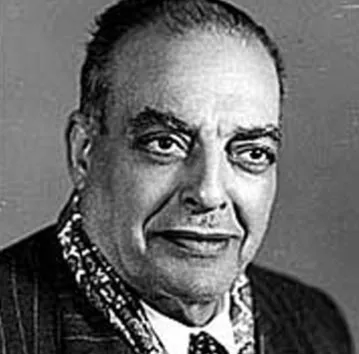
Composer
زكريا أحمد
1896–1961
Zakariyya Ahmad knew Umm Kulthum's voice before Cairo did: the composer, trained in Qur'anic recitation and religious song, heard her performing in the Delta and was among those who urged her family to bring her to the capital. Once she arrived, he composed for her steadily for three decades — several dozen songs in all — reaching a peak in the 1940s with lyricist Bayram al-Tunisi: "Ana Fi Intizarak" (1943) and "Ghanni Li Shwayya" (1945) marry his melodies to Bayram's vernacular verse. A sheikh by training and temperament, Zakariyya was the guardian of the Egyptian turath in her circle. His signature is deep-rooted tarab: phrases shaped like the mawwal, earthy rhythms, and unhurried melody that lets a colloquial line blossom into ecstasy. A bitter royalties lawsuit estranged the two through much of the 1950s; the reconciliation's gift was "Houwa Sahih El-Hawa Ghallab" (1960), which she premiered only months before his death in 1961.
1943 · Maqam Hijazkar
Ana Fi Entezarak (1943): full lyrics of Bayram al-Tunisi and Zakariyya Ahmad's vigil song — an absence counted second by second, with translation and notes.
1945 · Maqam Rast
Ghanni Li Shwayya (1945): full lyrics of Bayram al-Tunisi and Zakariyya Ahmad's ode to song itself, from the film Sallama — with translation and notes.
1960 · Maqam Saba
Howwa Sahih el-Hawa Ghallab (1960): full lyrics & translation of Bayram al-Tunisi's last song for Umm Kulthum — Zakariyya Ahmad's maqam Saba farewell.
History
Umm Kulthum made six musical films between 1936 and 1947, from Widad to Fatma. Why she went before the camera, the songs her films carried, and why she stopped.
Biography
The life of Umm Kulthum: from a Nile Delta village and Quranic training to Cairo's radio age, the national concerts, and the funeral of the century.
History
The complete Umm Kulthum songs list, decade by decade from 1924 to 1973: every recorded song with its year, lyricist, and composer — nearly 320 works in all.
The Ensemble
The composers behind Umm Kulthum: Qasabgi, Zakariyya Ahmad, Riad al-Sunbati, Mohammed Abdel Wahab, and Baligh Hamdi — and the sound each one gave her.
Concepts
What made Umm Kulthum's voice extraordinary — her contralto range, Quranic training, breath control, tarab, and the art of singing one line a dozen different ways.